
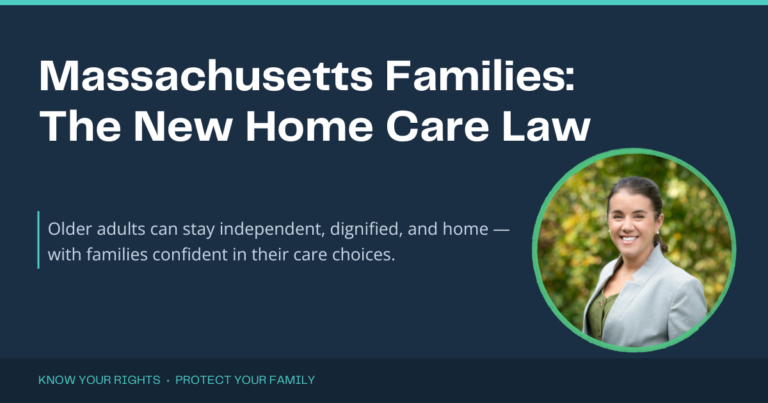
By Erin Nunes, Esq., Elder Law Attorney
For many older adults, there is no place more comfortable than home. As an elder law attorney, I often hear clients and their families express the same goal: they want to remain independent and receive care in their own homes for as long as possible. The good news is that Massachusetts has recently taken an important step toward making home care safer and more reliable for seniors and individuals with disabilities.
On August 7, 2026, Governor Maura Healey signed legislation creating Massachusetts’ first statewide licensing system for home care agencies. Until now, Massachusetts did not have a comprehensive statewide framework regulating all home care providers, despite the growing number of families relying on home-based care. The new law is designed to improve safety, accountability, and quality standards across the industry.
Why This Law Matters
As our population ages, more people are choosing to “age in place” rather than move into assisted living facilities or nursing homes. Home care services can help with everyday activities such as:
- Bathing and personal care
- Meal preparation
- Medication reminders
- Transportation assistance
- Companionship and supervision
- Household tasks
These services allow older adults to maintain greater independence and dignity while remaining in familiar surroundings. However, families have often faced uncertainty when evaluating home care agencies because oversight standards varied. The new law aims to provide families with greater confidence when selecting care providers.
What Will Change?
Under the new law, home care agencies will be required to obtain a state license before offering or advertising services. State agencies, including the Executive Office of Health and Human Services, the Department of Public Health, and the Executive Office of Aging and Independence, will oversee the licensing system.
The law also requires agencies to meet a number of important standards, including:
Background Checks
Home care providers will be required to conduct employee background checks. This added screening is intended to help protect vulnerable seniors and individuals with disabilities from abuse, neglect, exploitation, or theft.
Training Requirements
Workers will be required to receive safety and competency training. Reports indicate that training will include topics such as recognizing and reporting abuse, understanding dementia and Alzheimer’s disease, emergency response procedures, and fall prevention.
Insurance and Financial Accountability
Licensed agencies must maintain workers’ compensation and liability insurance and comply with financial and operational disclosure requirements. These measures provide additional consumer protections and accountability.
State Oversight and Investigations
State officials will have authority to inspect agencies, investigate complaints, and enforce compliance. Agencies that fail to meet requirements may face penalties, including suspension or revocation of their licenses.
What This Means for Families
For consumers, the law offers several practical benefits:
- Greater transparency. Families will have more assurance that licensed agencies meet statewide standards.
- Improved safety protections. Mandatory background checks, training requirements, and state oversight create additional safeguards for vulnerable adults.
- Better quality control. Consistent statewide standards should help improve care quality across the industry.
- More confidence when hiring care. Families can focus on finding the best care fit without wondering whether an agency meets basic professional standards.
Looking Ahead
The law also establishes a Home Care Oversight Advisory Council to help guide implementation and future regulations. In addition, a stakeholder committee will study worker and consumer safety issues and recommend additional protections. The legislation further creates a commission to examine family caregiving policies, including whether spouses should be eligible to receive compensation as caregivers through MassHealth.
Because these changes will be implemented over the coming months, families should expect additional regulations and guidance from state agencies as the licensing program is developed.
An Elder Law Perspective
While this legislation is a significant step forward, families should remember that choosing a home care provider remains an important decision. Even with stronger oversight, I encourage clients to:
- Ask detailed questions about caregiver qualifications and supervision.
- Request references when appropriate.
- Review service agreements carefully.
- Confirm insurance coverage and caregiver screening procedures.
- Coordinate home care plans with broader elder law and long-term care planning goals.
Home care is often just one component of a comprehensive plan that may also include powers of attorney, health care proxies, long-term care planning, MassHealth planning, and estate planning.
The new law is encouraging because it recognizes a reality many families already know: quality home care is essential to helping older adults live safely, independently, and with dignity. By establishing statewide standards and accountability, Massachusetts has taken an important step toward protecting some of our most vulnerable residents while providing families with greater peace of mind.
If you have questions about long-term care planning, home care options, MassHealth eligibility, or protecting a loved one’s ability to age in place, consult with an experienced elder law attorney who can help you evaluate your options and plan for the future.
Legal Notice: This content is for educational purposes and should not be construed as legal advice. Every case is unique; please consult with a qualified professional before taking any action based on the information contained in this post. Use of this content does not create a professional-client relationship.